Showing posts with label keto. Show all posts

Saturday, December 21, 2019

Amazingly Airy 5-Ingredient Keto Angel Food Cake (Dairy-Free)

Believe it or not, you can enjoy a wonderfully fluffy and airy angel food cake on a low-carb and keto diet! And the best thing about the recipe for this light-and-dreamy cake is that — you guessed it— you need only 5 ingredients to prepare it!

TIPS FOR MAKING THE AMAZINGLY AIRY ANGEL FOOD CAKE

As with any angel food cake recipe, this one calls for lots of eggs. They are the bulk ingredient in this voluminous keto cake, so they’re also the most important. You’ll get the best result when your eggs are at room temperature, so if you store your eggs in the fridge, make sure to take them out at least a few hours before baking.
The next tip for success is (naturally!), beat everything until it’s as fluffy and airy as possible. You really want to incorporate all the air you can into the eggs—and that goes for both the egg whites and the egg yolk mixture.
If you’re feeling ambitious, feel free to sift the dry ingredient mixture three times — just like you do when you make regular angel food cake. Personally, I tend to be lazy and I skip this step because I’ve never noticed any real difference whether I sift the dry ingredients or not. But if you’re aiming for a really fluffy cake, it’s better to be safe than sorry, so you might want to just go ahead and sift the dry ingredients three times. (Or you can simply do it because it’s a tradition!)
Other than that, this is a surprisingly simple cake to make. So, let’s take a closer look at how to prepare it:
First, combine the dry ingredients: that is, the coconut flour…
Coconut Flour | Low-Carb, So Simple
…and the baking powder.
Baking Powder | Low-Carb, So Simple
Mix well. (And sift three times, if you like.)
Mixing | Low-Carb, So Simple
Next, separate 8 eggs.
Separating Eggs | Low-Carb, So Simple
Place the whites into a large bowl.
Egg Whites in a Large Bowl | Low-Carb, So Simple
Beat until stiff peaks form.
Beating | Low-Carb, So Simple
Like this.
Stiff Peaks | Low-Carb, So Simple
Next, you’ll need the 8 egg yolks and the remaining 2 whole eggs. Place them into a clean bowl.
Egg Yolks and Whole Eggs | Low-Carb, So Simple
Add the sweetener.
Adding Sweetener | Low-Carb, So Simple
Now, beat this egg yolk and sweetener mixture…
Beating | Low-Carb, So Simple
…until very fluffy, voluminous, and pale. As thick as you can get.
Fluffy and Pale | Low-Carb, So Simple
Add the vanilla extract.
Vanilla Extract | Low-Carb, So Simple
Beat again until well combined.
Beating Again | Low-Carb, So Simple
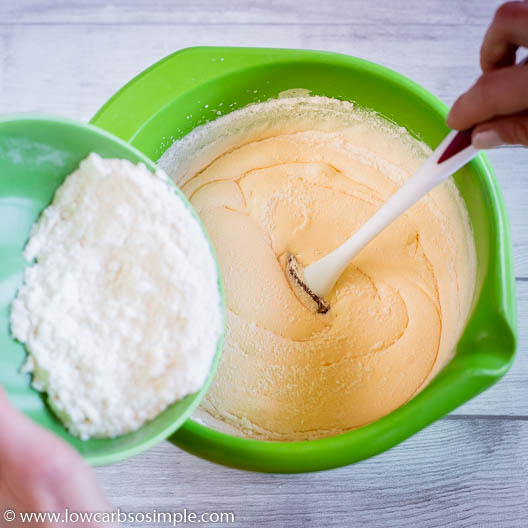
Now, take the dry ingredient mixture and start adding it little by little to the egg yolk mixture while gently stirring with a rubber spatula. Don’t add the dry ingredient mixture too fast: otherwise you’ll lose some of that lovely volume.
Adding Dry Ingredients | Low-Carb, So Simple
When you have added all the dry ingredient mixture, work fast (before the coconut flour starts thickening the batter) and combine the egg yolk mixture with the egg whites.
Combining | Low-Carb, So Simple
Mix with a rubber spatula…
Mixing with Rubber Spatula | Low-Carb, So Simple
…until smooth.
Smooth Batter | Low-Carb, So Simple
Pour into a very well-greased angel food pan or your preferred cake pan (with capacity of 10 cups = 2.4 L). I have a gorgeous heart-shaped pan from Nordic Ware here (no, they’re not sponsoring this post! Actually, I wouldn’t mind if they did, their stuff is so great…!)
Pouring into a Cake Pan | Low-Carb, So Simple
Bake in the preheated oven for 45 minutes, or until a toothpick comes out clean when inserted into the thickest part of the cake.
Baking | Low-Carb, So Simple
Remove the cake from the oven…
Baked | Low-Carb, So Simple
…and from the pan.
Ready Angel Food Cake Cooling | Low-Carb, So Simple
Let cool completely. Frost with your favorite keto frosting (this lemon glaze is wonderful, as is this vanilla frosting!) and enjoy.
Amazingly Airy 5-Ingredient Keto Angel Food Cake | Low-Carb, So Simple
Yum!
Amazingly Airy 5-Ingredient Keto Angel Food Cake | Low-Carb, So Simple

MY KETO ANGEL FOOD EXPERIMENTS

You might not know that a few years ago I published a monthly newsletter related to the keto diet and weight loss. Each newsletter contained helpful articles with tips, as well as 12 recipes related to different themes. One newsletter was all about the most delicious keto baked goods, and it included a keto version of angel food cake that I had developed.
I remember it took me lots of trial and error to get the keto angel food cake fluffy but not too dry. If I added fluid, it collapsed and turned out too moist. If I used only egg whites, the cake was like meringue — so dry that it crumbled when you so much as looked at it.
However, soon I found out that the key was to use egg whites as well as egg yolks and whole eggs. After that, finding the correct ratio—plus adding some coconut flour to make it all hold together—wasn’t that hard.
I didn’t want to use almond flour (even though it’s great: here’s one popular 5-ingredient keto cake recipe using almond flour), because you usually need a lot of it and the texture will be more coarse than when using coconut flour, which is much finer. This angel food cake naturally had to have a smooth texture.
Well, I remember I tried also whey protein instead of coconut flour, but it made the cake too dense, plus whey protein is a dairy product and I wanted to make this cake dairy-free.
In the newsletter recipe, I used cream of tartar as well as baking powder to help the cake rise. (I think I used the cream of tartar just because almost all regular angel food cake recipes call for it.)
Fast forward to this spring. I wanted to start experimenting with the keto angel food cake recipe that appeared in my newsletter because I needed a cake base for my son’s birthday cake (he turned 8 at the end of February).
I ended up making three (!) birthday cakes for my son: one for the family, one for the science club he was attending, and one for the visit to Grandma and Grandpa (i.e., my parents). I took the newsletter recipe and wondered what would happen if I omitted the cream of tartar and just used baking powder as a leavening agent, but slightly more than the 2 teaspoons that the original recipe called for.
So, I conducted an experiment that was otherwise identical to the newsletter recipe, except I omitted the cream of tartar and used 1 tablespoon baking powder. The result was superb, and I was really happy the cake turned out so fluffy and airy, even minus the cream of tartar. Now I had a great 5-ingredient cake recipe which I could post here on my 5-ingredient blog!
Amazingly Airy 5-Ingredient Keto Angel Food Cake | Low-Carb, So Simple
I made one further change, though: Instead of erythritol crystals, I tried powdered erythritol. In one of my experiments (in which I used a cake pan with lots of nooks and crannies), the erythritol somehow sank to the bottom of the cake pan (right into those nooks and crannies), forming a gel-like layer with some bubbles in it.
Yuck.
I remembered my first experiments with erythritol some 15 years ago, when I ended up with a similar gel-like layer on top of a cake. Using powdered erythritol solved the problem then. (Also, using less erythritol crystals and adding some stevia was another solution.) But now, I wanted to see how pure powdered erythritol would work.
It worked extremely well! No gel-like layer, but a smooth and even surface, even when I used a cake pan with small details. But for a flat-bottomed cake pan, erythritol crystals work almost equally well.
I finally got everything right! Now it’s about time to post the recipe so that you and your family can enjoy it, too!
So, here it is:
PrintAmazingly Airy 5-Ingredient Keto Angel Food Cake
Author: Elviira
  1. Preheat the oven to 325 °F (150 °C).
  2. Combine the coconut flour and the baking powder in a small bowl. Set aside.
  3. Separate 8 eggs. Place the 8 egg whites in a large bowl. Beat until stiff peaks form. Set aside.
  4. Place the 8 egg yolks, the 2 remaining whole eggs and the sweetener in a clean large bowl. Beat until as thick, fluffy, and pale as you can get.
  5. Add the vanilla extract. Mix until well combined.
  6. Fold in the coconut flour mixture little by little and mix gently but well with a rubber spatula until well combined.
  7. Immediately fold in the egg whites (before the coconut flour starts thicken) and mix gently with the rubber spatula again until well combined.
  8. Pour into a well-greased cake pan (capacity 10 cups = 2.4 L) or angel food pan.
  9. Bake for 45 minutes or until a toothpick inserted in the center of the cake comes out clean.
  10. Remove from the pan and let cool completely.
  11. Frost with your favorite keto frosting and enjoy.

TIPS FOR VARIATION

You can use this as your go-to basic cake any time you need a birthday cake or a cake for any other celebration. Just add different fillings and frostings.
You can also add different natural flavorings (like cherry, almond, raspberry, etc…) to the batter, if you like. Finely-grated, fresh orange peel or lemon peel would lend a bright, citrusy flavor, too. Orange essential oil (just use a couple of drops!) is another natural flavor enhancer.
Keep this simple recipe in mind next time you need a cake for just about any kind of celebration!Article Source

Monday, December 2, 2019

WHAT I EAT IN A DAY (KETO DIET + INTERMITTENT FASTING)

The Keto Diet and Weight Loss

If you have had a desire to shed some extra pounds, then perhaps you could have come across ketogenic diet, which is popularly known as Keto diet. It is a popular weight loss plan that promises significant weight loss in a short time.
But far from what most people believe it to be, the diet is not a magical tool for weight loss. Just like any other diet, it takes time, requires a lot of adjustment and tracking to see results.
What is the Keto diet?
The keto diet is aimed at putting your body in Ketosis. This diet plan is usually low carb with high intake of healthy fats, vegetables and sufficient proteins. In the this diet, there is also an emphasis on avoiding highly processed foods and sugars.
There are several types of Keto diets: standard ketogenic, cyclical, targeted and the high-protein diets. The difference in them depends on the carb intake. The standard ketogenic diet is low carb, high fat and adequate protein is the most recommended.
Is the Keto Diet Safe?
Most critics of the Keto diet say that it is not safe because of the emphasis on consuming high fat content. This is guided by the misconception that fats are bad for you. On the contrary, healthy fats are actually very good for you.
With this diet, you get lots of fats from healthy sources like avocado, nuts, fish, butter, eggs, coconut oil, palm oil, seeds like chia and red meat.
How Does the Keto Diet Aid in Weight Loss?
So how does the keto diet really work and help your body lose excess pounds? When on a high carb diet, your body uses glucose from carbohydrates and sugars to fuel body activities. When on a ketogenic diet, you supply the body with minimal amounts of carbs and sugars.
With reduced sugar and carbs supply, the glucose levels in the body are depleted causing the body to look for alternative energy sources. The body therefore turns to stored fats for energy which is why the Keto diet leads to weight loss.
This condition where your body burns fats for energy other than carbs is called ketosis. When your body goes into ketosis, it produced ketones as the fuel source rather than depending on glucose. Ketones and glucose are the only two power sources that fuel the brain.
Benefits of Ketosis and the Keto diet
Besides just aiding in weight loss, putting the body in ketosis comes with other health benefits too. Here are some of them:
  • Enhanced mental clarity
  • Improved physical energy
  • Steady blood sugar levels which makes it a good remedy for epilepsy and diabetes
  • Improved and enhanced skin tones
  • Lower cholesterol levels
  • Hormone regulation especially in women
The Ketogenic diet is one of the best diets you can follow for weight loss and to enhance your overall health. The diet can also be used for children who are overweight. There are numerous studies that support the diet showing significant results especially when coupled with exe
Mathenge Kabui Is an expert author on matters to do with weight loss. You can contact him to give you quality content for your website by following the link below: https://www.kenyawriters.com/customorders/


Article Source: http://EzineArticles.com/10199755

Friday, November 29, 2019

KETOGENIC DIET Meal Plan - 7 DAY FULL MEAL PLAN for Beginners

Are You Right For The Keto Diet?

These days, it seems like everyone is talking about the ketogenic (in short, keto) diet - the very low-carbohydrate, moderate protein, high-fat eating plan that transforms your body into a fat-burning machine. Hollywood stars and professional athletes have publicly touted this diet's benefits, from losing weight, lowering blood sugar, fighting inflammation, reducing cancer risk, increasing energy, to slowing down aging. So is keto something that you should consider taking on? The following will explain what this diet is all about, the pros and cons, as well as the problems to look out for.
What Is Keto?
Normally, the body uses glucose as the main source of fuel for energy. When you are on a keto diet and you are eating very few carbs with only moderate amounts of protein (excess protein can be converted to carbs), your body switches its fuel supply to run mostly on fat. The liver produces ketones (a type of fatty acid) from fat. These ketones become a fuel source for the body, especially the brain which consumes plenty of energy and can run on either glucose or ketones.
When the body produces ketones, it enters a metabolic state called ketosis. Fasting is the easiest way to achieve ketosis. When you are fasting or eating very few carbs and only moderate amounts of protein, your body turns to burning stored fat for fuel. That is why people tend to lose more weight on the keto diet.
Benefits Of The Keto Diet
The keto diet is not new. It started being used in the 1920s as a medical therapy to treat epilepsy in children, but when anti-epileptic drugs came to the market, the diet fell into obscurity until recently. Given its success in reducing the number of seizures in epileptic patients, more and more research is being done on the ability of the diet to treat a range of neurologic disorders and other types of chronic illnesses.
  • Neurodegenerative diseases. New research indicates the benefits of keto in Alzheimer's, Parkinson's, autism, and multiple sclerosis (MS). It may also be protective in traumatic brain injury and stroke. One theory for keto's neuroprotective effects is that the ketones produced during ketosis provide additional fuel to brain cells, which may help those cells resist the damage from inflammation caused by these diseases.
  • Obesity and weight loss. If you are trying to lose weight, the keto diet is very effective as it helps to access and shed your body fat. Constant hunger is the biggest issue when you try to lose weight. The keto diet helps avoid this problem because reducing carb consumption and increasing fat intake promote satiety, making it easier for people to adhere to the diet. In a study, obese test subjects lost double the amount of weight within 24 weeks going on a low-carb diet (20.7 lbs) compared to the group on a low-fat diet (10.5 lbs).
  • Type 2 diabetes. Apart from weight loss, the keto diet also helps enhance insulin sensitivity, which is ideal for anyone with type 2 diabetes. In a study published in Nutrition & Metabolism, researchers noted that diabetics who ate low-carb keto diets were able to significantly reduce their dependence on diabetes medication and may even reverse it eventually. Additionally, it improves other health markers such as lowering triglyceride and LDL (bad) cholesterol and raising HDL (good) cholesterol.
  • Cancer. Most people are not aware that cancer cells' main fuel is glucose. That means eating the right diet may help suppress cancer growth. Since the keto diet is very low in carbs, it deprives the cancer cells of their primary source of fuel, which is sugar. When the body produces ketones, the healthy cells can use that as energy but not the cancer cells, so they are effectively being starved to death. As early as 1987, studies on keto diets have already demonstrated reduced tumor growth and improved survival for a number of cancers.
Comparing Standard American, Paleo, & Keto Diets
(As a % of total caloric intake)
__________________________Carbs__________Protein_________Fat
Standard American Diet_____40-60%_________15-30%_________15-40%
Paleo Diet_________________20-40%_________20-35%_________25-50%
Keo Diet________________ __5-10%__________10-15%_________70-80%
The key distinction between the keto diet and the standard American or Paleo diets is that it contains far fewer carbs and much more fat. The keto diet results in ketosis with circulating ketones ranging from 0.5-5.0 mM. This can be measured using a home blood ketone monitor with ketone test strips. (Please know that testing ketones in urine is not accurate.)
How To Formulate A Keto Diet
1. Carbohydrates
For most people, to achieve ketosis (getting ketones above 0.5 mM) requires them to restrict carbs to somewhere between 20-50 grams (g)/day. The actual amount of carbs will vary from person to person. Generally, the more insulin resistant a person is, the more resistant they are to ketosis. Some insulin sensitive athletes exercising vigorously can consume more than 50 g/day and remain in ketosis, whereas individuals with type 2 diabetes and insulin resistance may need to be closer to 20-30 g/day.
When calculating carbs, one is allowed to use net carbs, meaning total carbs minus fiber and sugar alcohols. The concept of net carbs is to incorporate only carbs that increase blood sugar and insulin. Fiber does not have any metabolic or hormonal impact and so do most sugar alcohols. The exception is maltitol, which can have a non-trivial impact on blood sugar and insulin. Therefore, if maltitol is on the ingredient list, sugar alcohol should not be deducted from total carbs.
The level of carbs one can consume and remain in ketosis may also change over time depending on keto adaptation, weight loss, exercise habits, medications, etc. Therefore, one should measure his/her ketone levels on a routine basis.
In terms of the overall diet, carb-dense foods like pastas, cereals, potatoes, rice, beans, sugary sweets, sodas, juices, and beer are not suitable.
Most dairy products contain carbs in the form of lactose (milk sugar). However, some have less carbs and can be used regularly. These include hard cheeses (Parmesan, cheddar), soft, high-fat cheeses (Brie), full-fat cream cheese, heavy whipping cream, and sour cream.
A carb level less than 50 g/day generally breaks down to the following:
  • 5-10 g carbs from protein-based foods. Eggs, cheese, and shellfish will carry a few residual grams of carbs from natural sources and added marinades and spices.
  • 10-15 g carbs from non-starchy vegetables.
  • 5-10 g carbs from nuts/seeds. Most nuts contain 5-6 g carbs per ounce.
  • 5-10 g carbs from fruits such as berries, olives, tomatoes, and avocados.
  • 5-10 g carbs from miscellaneous sources such as low-carb desserts, high-fat dressings, or drinks with very small amounts of sugar.
Beverages
Most people require at least half a gallon of total fluid per day. The best sources are filtered water, organic coffee and tea (regular and decaf, unsweetened), and unsweetened almond and coconut milk. Diet sodas and drinks are best avoided as they contain artificial sweeteners. If you drink red or white wine, limit to 1-2 glasses, the dryer the better. If you drink spirits, avoid the sweetened mixed drinks.
2. Protein
A keto diet is not a high protein diet. The reason is that protein increases insulin and can be converted to glucose through a process called gluconeogenesis, hence, inhibiting ketosis. However, a keto diet should not be too low in protein either as it can lead to loss of muscle tissue and function.
The average adult requires about 0.8-1.5 g per kilogram (kg) of lean body mass per day. It is important to make the calculation based on lean body mass, not total body weight. The reason is because fat mass does not require protein to maintain, only the lean muscle mass.
For example, if an individual weighs 150 lbs (or 150/2.2 = 68.18 kg) and has a body fat content of 20% (or lean body mass of 80% = 68.18 kg x 0.8 = 54.55 kg), the protein requirement may range from 44 (= 54.55 x 0.8) to 82 (= 54.55 x 1.5) g/day.
Those who are insulin resistant or doing the keto diet for therapeutic reasons (cancer, epilepsy, etc.) should aim to be closer to the lower protein limit. The higher limit is for those who are very active or athletic. For everyone else who is using the keto diet for weight loss or other health benefits, the amount of daily protein can be somewhere in between.
Best sources of high quality protein include:
  • Organic, pastured eggs (6-8 g of protein/egg)
  • Grass-fed meats (6-9 g of protein/oz)
  • Animal-based sources of omega-3 fats, such as wild-caught Alaskan salmon, sardines, and anchovies, and herrings. (6-9 g of protein/oz)
  • Nuts and seeds, such as macadamia, almonds, pecans, flax, hemp, and sesame seeds. (4-8 g of protein/quarter cup)
  • Vegetables (1-2 g of protein/oz)
3. Fat
Having figured out the exact amounts of carbs and protein to eat, the rest of the diet comes from fat. A keto diet is necessarily high in fat. If sufficient fat is eaten, body weight is maintained. If weigh loss is desired, one should consume less dietary fat and rely on stored body fat for energy expenditure instead.
(As a % of total caloric intake)
_________________________Maintain Weight_______Lose Weight
Carbs____________________5-10%________________5-10%
Protein__________________10-15%_______________10-15%
Fat from diet_____________70-80%_______________35-40%
Fat from stored body fat___0%___________________35-40%
For individuals who consume 2,000 calories a day to maintain their weight, daily fat intakes range from about 156-178 g/day. For large or very active individuals with high energy requirements who are maintaining weight, fat intakes may even exceed 300 g/day.
Most people can tolerate high intakes of fat, but certain conditions such as gallbladder removal may affect the amount of fat that can be consumed at a single meal. In which case, more frequent meals or use of bile salts or pancreatic enzymes high in lipase may be helpful.
Avoid eating undesirable fats such as trans fat, highly refined polyunsaturated vegetable oils, as well as high amounts of omega-6 polyunsaturated fats.
Best foods to obtain high quality fats include:
  • Avocados and avocado oil
  • Coconuts and coconut oil
  • Grass-fed butter, ghee, and beef fat
  • Organic, pastured heavy cream
  • Olive oil
  • Lard from pastured pigs
  • Medium chain triglycerides (MCTs)
MCT is a specific type of fat that is metabolized differently from regular long-chain fatty acids. The liver can use MCTs to rapidly produce energy, even before glucose, thus allowing an increased production of ketones.
Concentrated sources of MCT oil are available as supplements. Many people use them to help achieve ketosis. The only food that is uniquely high in MCTs is coconut oil. About two-thirds of the coconut fat is derived from MCT.
Who Should Be Cautious With A Keto Diet?
For most people, a keto diet is very safe. However, there are certain individuals who need to take special care and discuss with their doctors before going on such a diet.
  • Those taking medications for diabetes. Dosage may need to be adjusted as blood sugar goes down with a low-carb diet.
  • Those taking medications for high blood pressure. Dosage may need to be adjusted as blood pressure goes down with a low-carb diet.
  • Those who are breastfeeding should not go on a very strict low-carb diet as the body can lose about 30 g of carbs per day via the milk. Therefore, have at least 50 g of carbs per day while breastfeeding.
  • Those with kidney disease should consult with their doctors before doing a keto diet.
Common Concerns With A Keto Diet
  • Not being able to reach ketosis. Make sure you are not eating too much protein and there is no hidden carbs in the packaged foods that you consume.
  • Eating the wrong kinds of fat such as the highly refined polyunsaturated corn and soybean oils.
  • Symptoms of a "keto-flu", such as feeling light-headed, dizziness, headaches, fatigue, brain fog, and constipation. When in ketosis, the body tends to excrete more sodium. If one is not getting enough sodium from the diet, symptoms of a keto-flu may appear. This is easily remedied by drinking 2 cups of broth (with added salt) per day. If you exercise vigorously or the sweat rate is high, you may need to add back even more sodium.
  • Dawn effect. Normal fasting blood sugars are less than 100 mg/dl and most people in ketosis will achieve this level if they are not diabetic. However, in some people fasting blood sugars tend to increase, especially in the morning, while on a keto diet. This is called the "dawn effect" and is due to the normal circadian rise in morning cortisol (stress hormone) that stimulates the liver to make more glucose. If this happens, make sure you are not consuming excessive protein at dinner and not too close to bedtime. Stress and poor sleep can also lead to higher cortisol levels. If you are insulin resistant, you may also need more time to achieve ketosis.
  • Low athletic performance. Keto-adaptation usually takes about 4 weeks. During which, instead of doing intense workouts or training, switch to something that is less vigorous. After the adaptation period, athletic performance usually returns to normal or even better, especially for endurance sports.
  • Keto-rash is not a common side effect of the diet. Probable causes include production of acetone (a form of ketone) in the sweat that irritates the skin or nutrient deficiencies including protein or minerals. Shower immediately after exercise and make sure you eat nutrient dense whole foods.
  • Ketoacidosis. This is a very rare condition that occurs when blood ketone levels go above 15 mM. A well-formulated keto diet does not cause ketoacidosis. Certain conditions such as type 1 diabetes, being on medications with SGLT-2 inhibitors for type 2 diabetes, or breastfeeding require extra caution. Symptoms include lethargy, nausea, vomiting, and rapid shallow breathing. Mild cases can be resolved using sodium bicarbonate mixed with diluted orange or apple juice. Severe symptoms require prompt medical attention.
Is Keto Safe For Long-Term?
This is an area of some controversy. Though there have not been any studies indicating any adverse long-term effects of being on a keto diet, many experts now believe that the body may develop a "resistance" to the benefits of ketosis unless one regularly cycles in and out of it. In addition, eating a very high-fat diet in the long-term may not be suitable for all body types.
Cyclical keto diet
Once you are able to generate over 0.5 mM of ketones in the blood on a consistent basis, it is time to start reintroducing carbs back into the diet. Instead of eating merely 20-50 g of carbs/day, you may want to increase it to 100-150 g on those carb-feeding days. Typically, 2-3 times a week will be sufficient. Ideally, this is also done on strength training days on which you actually increase your protein intake.
This approach of cycling may make the diet plan more acceptable to some people who are reluctant to permanently eliminate some of their favorite foods. However, it may also lower resolve and commitment to the keto diet or trigger binges in susceptible individuals.
Carol Chuang is a Certified Nutrition Specialist. She has a Masters degree in Nutrition and is a Certified Gluten Practitioner. She specializes in Metabolic Typing and Functional Diagnostic Nutrition.

Article Source: http://EzineArticles.com/10129608

Tuesday, November 26, 2019

How to do a Keto Diet: The Complete Guide

What Types of Food are in a Keto Meal Delivery Service?

More and more people are going on the keto diet to lose weight. Why is that? It works. Over 20 studies prove the keto diet can help you lose weight.

The keto diet is a high-fat and low-carb diet; 70%-80% of the keto diet consists of fat, 10%-20% protein, and 5%-10% carbohydrates. With such a strict diet, you can’t decide last minute to eat out during your busy days. Fortunately, there is a takeout alternative. A keto meal delivery service can deliver fully-prepared, delicious, and keto-friendly meals to your door, so you don’t even have to cook! But what kind of food can you expect in your keto meal service? We’ll break down our menu types and the different foods we offer.

General Keto Menu

If you’re new to the keto diet or want more variety, our general keto menu includes a diverse selection, as well as new, delicious experiences with each meal delivery. Here are some of the ingredients you can expect.

Meat

We try to include meat in every order. While protein isn’t the largest staple in the keto diet, it’s essential you get enough protein and meat in your diet. Since the keto diet is high in fat, we focus on providing fatty meats to ensure you meet your minimum amount of fat content. Expect to see plenty of red meat such as beef as well as pork. In addition, you’ll also receive lean meats such as chicken. Chicken provides the protein you need and other vitamins and minerals such as phosphorus, selenium, niacin, and vitamin B6.

Fish

As well as meat, you’ll see plenty of fish in your meals. Fish contains essential monounsaturated and polyunsaturated fats you need for the keto diet, such as omega-3 and omega-6 fatty acids. Expect to see plenty of salmon, trout, tuna, sardines, mackerel, and herring in your keto meal delivery packages.

Eggs

Eggs are both a great source of protein and fat. A serving of eggs has seven grams of protein, five grams of fat, and 1.6 grams of saturated fat. Expect to find hard-boiled eggs in your deliveries, as well as scrambled eggs incorporated into many meals.

Cheese

Cheese is a dairy product high in fat. This helps make up the required fat content in your diet. The fat in cheese also boasts several health benefits. Cheese contains saturated, polyunsaturated, and monounsaturated fat, each of which helps improve our health. Keep in mind, different types of cheese have different fat content. Cheddar, provolone, Colby, and Swiss cheese has some of the most fat while American, feta, and mozzarella have some of the lowest amounts of fat. Expect to find the high-fat cheeses in your meals compared to the lower fat cheeses.

Seeds

Seeds are a great source of fat. Many seeds, such as pumpkin seeds, have saturated, polyunsaturated, and monounsaturated fats. You can expect to find pumpkin seeds and other healthy seeds in your meals, either ground up or as a garnish.

Nuts

Nuts are also high in fat and protein. A serving of almonds contains 14 grams of fat and 6 grams of protein. Since almonds are high in these nutrients but low in calories, they can help reduce belly fat. Expect to find plenty of almonds in your keto meals, especially ground up and mixed with the food. You’ll also find peanuts and pistachios.

Veggies

There are plenty of fun ways to incorporate vegetables into your keto meals. Veggies are an essential part of the keto diet, for their concentrated source of vitamins and minerals, and while they can be a chore to prepare or eat, expect the veggies in your keto meal delivery to be fresh, ready, and creative.
For starters, low-carb veggies are used as a substitution for carbs. Cauliflower rice, or ground-up cauliflower, is used as a replacement for traditional grain rice. You’ll get a serving of veggies in your meal and you won’t be able to taste the difference between the cauliflower and the rice.
Other fun ways keto meal delivery services mix in veggies is by sautéing them, flavoring them with keto-friendly glazes and sauces, and classically roasting or steaming them as a side dish.

Lifestyle Menu

Do you want something more exquisite from your keto diet? Bold and flavorful meals such as fajitas, jambalaya, and tacos are available and keto-friendly! A keto meal delivery service will prepare these meals so they’re just as tasty as the original.
Here’s what you can expect.

Zucchini Spaghetti

Remember how we mentioned that there are veggie-alternatives to carbs? Meet the zoodles, also known as zucchini noodles! Zucchini is put through what is called a spiralizer, which cuts the zucchini in long, thin strands similar to spaghetti noodles. Expect the keto delivery meal service to add in some meat and veggies with keto-friendly sauce.

Carb-Less Tacos and Burgers

If there’s no carb alternative, throw out the carb and stick to the good stuff! That’s what a keto delivery meal service will do for your tacos and burgers. For burgers, expect to receive a huge chunk of beef (or chicken for chicken burgers) with toppings such as cheese, and extra veggies such as tomatoes and mushrooms. If you prefer tacos, there’s no need for the shell. You’ll receive the sautéed beef, whole grain or carb-alternative rice, and keto-friendly salsa.

Vegan Meals

A vegan diet already requires great care and curation, but vegans can take advantage of the keto diet, too. Allow keto meal delivery to help. Here’s what’s included in a vegan keto meal delivery service.

Vegetables

All vegan meals start at the core of plant-based food: vegetables! From cauliflower rice to grilled and roasted veggies, and even Asian stir-fried vegetables, there are many ways to get your veggie fix in.

Whole Grain or Carb-Alternatives

Since the keto diet only allows for only few carbs, the keto meal delivery service will measure your carb intake to ensure you’re receiving the daily recommended carb intake satisfiying keto diet needs.
Expect to see brown rice and even whole-grain noodles in your vegan keto meals.

Sign Up for Keto Meal Delivery Today

Do all of these foods and meals sound delicious? Signing up for keto meal delivery is easy! We prepare all the meals and deliver them to your door. Register with us today!Article Source

Monday, November 25, 2019

How To Tell If You're In Ketosis: 6 Signs You're In Ketosis (With Health Coach Tara)

Everything You Need to Know About the Keto Diet

2019 Ultimate Guide to Ketogenic Diet

Ketogenic Diet

A ketogenic diet (keto) was introduced almost 100 years ago and used extensively in epileptic children with great success. One side effect they found was a drastic reduction in weight. Keto Diet involves a radical restriction in daily carbs consumption. Most times, this is usually in combination with high fat or moderate protein regimen.
Normally the daily carbs content allowable in a ketogenic diet is 30-50 grams net carbs per day depending on your body weight. The 2019 Ultimate Guide to Ketogenic Diet includes the types, how to choose the best, the benefits and side effects of Keto Diet. There are many rumours out there that it is the best diet to lose weight fast but it comes at a price.

Types of Ketogenic Diet


Standard Ketogenic Diet (SKD)

The SKD version is a very high-fat, moderate protein and very low carbohydrates. This version is 75% fat, 20% protein and 5% carbs of total calorie intake.

High Protein Ketogenic Diet

This is almost similar to SKD, only with higher protein intake. High protein version is mostly useful to people looking to build or preserve muscle mass while remaining in constant ketosis. It is 60% fat, 35% protein and 5% carbs

Cyclical Ketogenic Diet

This version suits to people unable to stick to SKD. In Cyclical diet, there re-feed days to load up the carbs after being in ketosis. You can choose re-feed every 7th day or every 4th days but to get the best results there should be consecutive ketogenic days.

Targeted Ketogenic Diet

This is great for people who are very active at the gym or serious about engaging in intense physical activity. By adding more carbs prior to workouts you will have more energy for workouts and able to put more efforts. This means careful selection of foods allowed in a ketogenic meal plan before a workout.

Intermittent Ketogenic Diet

This is eating the same ketogenic food within the 8-hour window during the day. The ratio of macros remains the same except that an overnight fast of 14-16 hours is necessary. This change in timing has the most profound effect on hormones and fat loss.
As in any diet, keto claims many health benefits for its practitioners. Among the many keto diet benefits is weight loss. This has made the keto diet plan one of the most sought after programs in recent history, and which attributes to its present popularity.
Keto diet benefits don’t come without its side effects. Side effects are a lookout for any program promising significant weight loss. And the keto diet plan promises weight loss to 100 lbs.

Food Choices

Ketogenic diet comes with its own list of foods to eat and foods to avoid. There are, however, plenty of resources in books and online on the keto diet, easy to make recipes. The food choices you have in a keto diet plan are mostly food you have also been enjoying in your regular meals. The only food to avoid in keto is food that has a high carbohydrate content, starchy foods, and sugar-laden desserts and drinks. These are the kinds of foods that do not help you achieve “ketosis” or throw you out of “ketosis”.

What is Ketosis?

Ketosis is a metabolic state when the body uses ketone bodies as the main source of fuel instead of glucose coming from carbs or glycogen store in muscles or liver. Most times we use Ketone bodies and Ketones interchangeably, though not all ketones are ketone bodies and vice versa.
We achieve ketosis when the body’s glycogen reserves deplete. This triggers the liver to break down fat for energy. It breaks fat down into ketone bodies or ketones. Ketones (fats) now become the new source of energy for your bodies various activities, instead of glucose (sugar). It carries them to the various tissues of your body including the brain to power their activities. Mitochondria cells in the liver make ketones bodies by breaking down the fats. 
There are 3 types of Ketone bodies produced by the liver:
  • Acetoacetate 
  • Acetone 
  • Beta Hydroxy Butyrate (BHB)

How do you know if you are in ketosis?

There are keto strips available online and in pharmacies that can test ketones in the urine or in the blood. The most common ketone tested in urine or blood is BHB. The best way to test Ketone bodies is a blood test measuring BHB levels. BHB levels below above 0.3 mmol/L indicate ketosis.

Signs and Symptoms that accompany ketosis.


1) Weight loss

One of the most first signs that you are in ketosis is weight loss. Many have experienced significant weight loss during the first month doing a keto diet. The reason for the huge amount of weight loss in the initial stage is because of the loss of water in the body.
Glycogen attaches to water molecules in the body in a ratio of 1 to 3, one molecule of glycogen attaches to 3 molecules of water. Depletion of glycogen levels during ketosis drains the excess holding water out leading to weight loss known as “water weight loss”. This happened initially within the first two weeks and a lot of the weight loss because of the burning of reserve fats come later.

2) Suppressed appetite

Another important sign that your body is in a state of ketosis is that you do not easily get hungry. You can go on without food intake for a longer time, compared to when your diet was carbohydrate-based. The reason for this is that when the body senses depletion of glucose in your system, it sends hunger signals to your brain. This is the reason you always feel hungry.
But if you follow a ketogenic diet plan and the high intake of fat keeps you full for a longer time and this stabilised the blood sugar causing brain-signalling system hunger signal to cease. Therefore, people on keto find it relatively easier to go fasting. Intermittent Fasting has become an effective partner of keto to improve health and longevity.

3) Mental clarity

Ketone bodies produced during keto diet enhance brain activity. They fuel the brain cells and reduce oxidative stress. The ketogenic diet is a preferred diet for children suffering from neurological disorders like autism and epilepsy with great success.

4) Keto breath

One drawback of the keto diet is “keto breath”. It is a bad breath caused by an acetone-like odour coming from ketones. However, some also observe it as fruity or sweet smell. You can chew sugar-free gum or breath fresheners to counteract this.

5) Muscle cramps

Another manifestation of this is night cramps where leg muscles experience painful cramps during sleep. This results from the depletion of electrolytes associated with the body’s loss of water. The resulting electrolyte imbalance causes poor circulation resulting in leg cramps. To fix this, you need to take supplements to correct the deficiency. One of these is Bone Broth. One other readily available home remedy for leg cramps is Himalayan pink salt taken orally. 1/4th teaspoon mixed in water helps counteract or prevent the symptoms associated with electrolyte deficiency.

6) Keto flu

This is not the flu. Its symptoms are not “flu-like” except for the headaches. The drastic nature of some changes the body has undergone in a short time and the electrolyte imbalance accompanying it often results in severe headaches. We can treat this with simple measures. Some people experience severe drowsiness and sleepiness as they adjust to keto. Others report what we call “brain fog” a vacuous sensation in the brain where the activity seems suspended and nothing seems to go on inside. Again, these we can fix by maintaining electrolyte balance and regular supplementation. Usually, these symptoms stay for a week and then dissipate themselves.

What are the benefits of the Ketogenic Diet?


1) Weight loss

It is one benefit that keto has become popular. If you are thinking of going on a ketogenic diet, just make sure you do it according to its standards. You will lose fat faster enough if you do it consistently.
I would say you see results with 2-3 months. It is not a surprise losing 3-4 kgs within a week or 10 days because the weight lost initially is mostly the water because of a decrease in carbs intake. [Study]

2) Heart health

One of the non-scale victories (NSV) of doing keto is your heart will become healthier. This is by lowering triglycerides, cholesterol, an improvement in your HDL to LDL ratio. You not only feel better, but markers for heart disease will also improve gradually. Another sign that the heart is getting healthier is the lowering of blood pressure.
However few studies done on rats denied the beneficial effects on markers of heart disease. The high fat and meat intake with lower soluble fibre increases the risk of heart-related conditions. The people in the middle age and with a history of heart disease should consult Nutritionist or Functional Medicine Practitioner before initiating Ketogenic diet.

3) Blood sugar control

One of the greatest benefits of keto is blood sugar and diabetes management. The main culprit for rising in blood sugar is the intake of carbs and sugar. Restriction of carb intake to only 50 gm per day and adding fats helps manage and stabilise blood sugar levels. This accounts for better management of type-2 diabetes (T2D).
The precaution is advised to patients who are at increased risk of cardiovascular disease. In various studies, the Ketogenic diet (high fat) results in unfavourable changes in lipid levels. A thorough assessment and history are important to decide whether to follow a Ketogenic diet or Low carbohydrate diet[Study] 

What are the Side effects of Keto Diet?


1) Cravings 

There aren’t many side effects of a ketogenic diet. It cut out almost all the carbs and sugars from the diet, including sodas, even if they are diet-sodas and alcohol. In the initial phase, you may crave for sugars but the only thing which can prevent you is the right amount of fats. What people do is they drastically cut down the calories also which is wrong. We need to understand that we don’t have to reduce the calories drastically rather just replace those with healthy fats.

2) Digestion

People with pancreatitis, liver or gallbladder disorders should stay away from Ketogenic Diet because of high-fat content. The issues with these either lower or obstruct enough release of bile production or lipase enzymes necessary for fat metabolism. A high-fat diet can also lead to constipation in many individuals. Use of magnesium salts, high water intake and enzyme supplements can resolve this issue.

3) Deficiencies

The restriction of carbs can lead to mineral and vitamin deficiency. Extra magnesium and other vitamins in the form of supplements help resolve this issue to a great extent. Good multivitamin formula and 400-600 mg of magnesium can resolve this issue.

4) Sleep

Another side effect of the Keto Diet is loss of sleep. Some people sleep better when they eat carbs at dinner like me. I would suggest having chamomile or ginseng tea in the evening. Supplements like L-theanine, Ashwagandha and Melatonin helps to induce restful sleep. You can try different and see what works for you.

What you cannot Eat?

  • All sugars and sugar-containing foods like soda, juice, candy, cakes and ice-cream
  • All Grains including wheat, millets and rice
  • Bread, pasta and cereals
  • Fruits except few
  • Starchy vegetables like potatoes, pumpkin and mushrooms
  • Beans and legumes
  • Unhealthy and refined fats/oils including mayonnaise
  • All spreads and sauces
  • Alcohol, wine and beer

What you can Eat?


  • Meats – All meats are good beef, pork, chicken (and eggs), turkey, lamb, goat, etc. (grass-fed is a better option)
  • Fish – All fish are good. The fattier the fish, the better like salmon, tuna, mackerel, cod and sardines
  • Dairy – Dairy creams, cooking and whipping creams, cheese. BUT not milk, because milk has lactose (sugar)
  • Oils – Extra virgin Olive oil, avocado oil, coconut oil, grass-fed or regular butter, ghee and MCT oil. AVOID hydrogenated oils and oils from seeds.

What you can Eat..Continued

  • Vegetables – Green leafy vegetables are the best. Nightshade vegetables (eggplant, tomatoes) are OK. AVOID starchy root crops and tubers (not necessarily vegetables) like carrots, squash, and potatoes.
  • Fruits – We recommend berries of all sorts. AVOID all other fruits because of fructose (sugar).
  • Beverages – Coffee, tea, unsweetened cocoa
  • All herbs and spices
  • Nuts, seeds and Nut butter – Peanuts, almonds, walnuts, pecans, pumpkin seeds, sunflower seeds, sesame and flaxseeds

Sample Meal Plan


Breakfast: 2-4 whole Eggs, bacon, 1/2 avocado and 1 tomato
Lunch: Grilled chicken, green leafy salad with 1 tbsp of olive oil and 1 tbsp of mixed seeds and feat cheese
Evening: Chamomile and ginger tea or decaf coffee with 1 tbsp of MCT oil
Dinner: Grilled salmon, 1 cup of broccoli and 1 tbsp of almond butter

Sample Smoothie Recipe


200 ml of unsweetened Almond milk
1/2 cup of frozen blueberries
1 tsp of Vanilla extract
50 ml of coconut milk or cream
1tsp of MCT oil
Stevia to taste
Blend all with ice and ENJOY!

Keto Diet for Fat Loss

It is best to consider taking more active participation and give your health the boost it needs. Keto promises huge health benefits to obese people who have tried every diet but see nothing but failure.
The ketogenic is hope for people who are desperate to bring a change to their health for better. It is difficult or almost impossible for a vegan or vegetarian to follow the Keto Diet. Low-Carb Diet is hope for vegetarians or vegans for losing weight.

Conclusion

Various studies on ketogenic diet propose that it is difficult to adhere to carbohydrate restriction for long term. The long term use of Ketogenic diet changes the microbiome in the intestine due to a low amount of dietary fibre.
Dietary fibre especially soluble fibre is fermented in the gut by microbes. This fermentation leads to the production of short-chain fatty acids like butyrate, acetate and propionates. These SCFA’s play an important role in the immune system and indigenous production of essential vitamins. SCFA’s have anti-inflammatory, anti-cancer and disease-fighting properties.
People with Autoimmune diseases such as Diabetes Type 1 and multiple sclerosis are found to have low levels of SCFA especially butyrate.
Conclusively, Ketogenic diet is good at managing sugar levels and reducing Obesity to a great extent but this can be achieved by following Slow-carb or Low-carb diet without any side effects.
The Keto Diet is good to boost greater fat loss at a faster pace but it is advisable to shift to Low carb diet after a few weeks or months to prevent any side effects. Genetics, history and food preference should be taken into account to choose what kind of food to be consumed for optimal health and fat loss. It is always best to consult a Nutritionist or a Functional Medicine Practitioner before initiating this radical diet such as Keto.Article Source